
WIGAN EXCEPTIONALISM
A plea to understand Wigan on its terms rather than viewing it as an extension of somewhere else

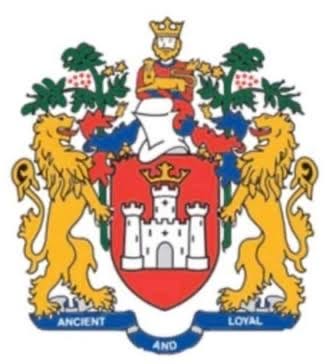
{the old Wigan coat of arms}
INTRODUCTION
As far as the national political discourse goes, the town of Wigan in the North-West of England, might as well be on the moon. British news media have ‘North of England’ correspondents (note that there are no South of England correspondents,) which suggests it is viewed as existing on the periphery rather than in the core, and, in general, London-based news-media are prone to treat regional/provincial Britons like anthropologists studying remote tribes. Even the basic geographic details of Wigan are hard to grasp unless one happens to have lived there for any length of time (raises hand.) Wigan is both a town (the town I'm writing this blog about) and also a borough (which includes not only Wigan but also Leigh, Atherton and Tyldesley.) Wigan is in something called ‘Greater Manchester’ (an administrative zone carved out of Lancashire and created by the 1972 Local Government Act) but is not part of Manchester (which is a city with its own distinct history separate from Wigan.) The town of Wigan is mainly represented in parliament by two constituencies, one of which is called Makerfield and within Makerfield there is a district called Ashton-in-Makerfield, which outsiders tend to conflate with Makerfield itself, when it is only one part of it.
For an outsider then, Wigan can be a confusing place. Normally, this doesn't matter, Wiganers get on with their lives and don't unduly worry about how they are perceived at the national level in that there London. If Wiganers have a catchphrase then it is “ah, be reet,” not dissimilar to the way the Irish say “ah sure, it’ll be grand,” a way of saying that everything will turn out fine in the end, which reflects an ingrained philosophical/stoical view of life and its vicissitudes. However, Josh Simons’ decision to stand down as the Makerfield MP to clear the way for Andy Burnham to return to Parliament and potentially become Prime Minister means that how Wigan is viewed at the national level does have wider implications which extend beyond its limited confines for once.
WIGAN NEEDS TO BE UNDERSTOOD IN ITS OWN TERMS
I grew up in Wigan. I lived in Wigan for 28 years in the Makerfield constituency. The same constituency which is now the subject of so much political exegesis. I'm therefore arguably better positioned than most to opine on what Wigan is and what it isn’t. First of all, Wigan needs to be understood in its own terms. Wigan is not a suburb of Manchester. It's not an extension of Manchester in any sense and never has been. Hence why the term ‘Greater Manchester’ is so confusing.
There is an economic logic to agglomeration: grow successful urban cores like Manchester, improve connectivity, attract investment, increase graduate retention, and prosperity will diffuse outward through the wider city-region, of which Wigan is theorised to be part. What this doesn't tell us is how people in Wigan view themselves and their town. Simply put, Wiganers do not see themselves and their town as being part of Manchester in any sense. Wigan and Manchester may have an economic relationship which Wigan benefits from—and even that is contestable—but if you want to understand Wigan from a political perspective you need to understand it from the perspective of the people who have actually spent some time there I'm afraid.
Wigan has been shaped by its own history and whilst that history overlaps with Manchester in places, there are also significant divergences too. Likewise with respect to Liverpool. I've seen one pundit describe Wigan as in Liverpool’s cultural orbit. First of all, Liverpool doesn't really have a cultural orbit. Instead it has a diaspora of sorts formed by post-WW2 internal migration which created Liverpudliansed sections of towns like Runcorn in Cheshire, Skelmersdale in Lancashire, and a sizable proportion of the Wirral peninsula. This doesn't really describe Wigan. Not only do Wiganers not view themselves as Mancunian or Scouse-adjacent, nor do actual Mancunians or Liverpudlians either, as evidenced by terms such as ‘Yonner’ and ‘Wool,’ which Mancunians and Liverpudlians sometimes use to describe people in towns like Wigan— in a similar fashion to the way a Dubliner might use the term ‘Culchie’—to indicate that they view the people from the surrounding areas as less sophisticated i.e as unMancunian and unLiverpudlian.
WHAT I MEAN BY WIGAN EXCEPTIONALISM
A few years ago I wrote a blog (on a different blogsite) about Liverpool called ‘Scouse Exceptionalism.’ My thesis was that Liverpool has a very strong sense of itself as different from its environs and that this sense of distinctiveness has shaped its politics and gave it a quasi-sectarian flavour. I placed great emphasis on Irish migration in creating this sense of Scouse Exceptionalism. If I were to revisit that blog at some point and write a follow up I would revise that thesis somewhat. Scouse Exceptionalism is real but its true wellspring, in my opinion, is its history as a port city and the status which this gave the city as the second city of empire. Liverpool’s maritime history gave it a global outward orientation, which the rest of Historic Lancashire did not share to anywhere near the same extent. Even the Liverpool accent is different from the rest of Historic Lancashire, shaped as it is by Irish idiolect and Welsh intonation/prosody.
Wigan Exceptionalism is not quite the same as this. Wigan is not sharply different from the rest of Historic Lancashire in the same way that Liverpool is. Its accent and sense of humour is shared by neighbouring towns such as Bolton and it is a Rugby League-playing ex-pit town in the same way that neighbouring towns like Leigh and St Helens are. What I'm reaching for in the term Wigan Exceptionalism is the sense in which Wigan has been largely shaped by a single industry. You cannot understand Liverpool without reference to its history as a port city. Likewise, you cannot understand Wigan without reference to its history as a pit town.
Scouse exceptionalism emerged from its maritime history. The very term ‘Scouse’ derives from a dish eaten by Scandinavian sailors. Liverpool’s identity was forged from ships, trade, empire, Irish/Welsh inward-migration, Atlantic commerce, etc. Wigan’s exceptionalism emerged from extraction: coal, pits, unionism, municipal Labourism, and the closed moral world of the coalfield. Liverpool ends up becoming culturally detached from Lancashire. Wigan remains recognisably Lancastrian. Liverpool’s exceptionalism is: maritime, cosmopolitan, externally oriented, culturally hybridised, linguistically distinctive, quasi-city-state in mentality. Whereas Wigan’s exceptionalism is: industrial, inward/cohesive, shaped by a single extractive industry, institutionally homogeneous, socially dense rather than cosmopolitan.
Wigan shares a great deal with the wider Lancastrian coalfield belt. What makes it ‘exceptional’ is not cultural difference so much as the degree to which coal structured everything: work, politics, settlement patterns, masculinity, unionism, humour, sport, rhythms of life, civic identity, Labourism itself. Wigan’s identity is unusually occupational in origin. Lots of English towns had industry; fewer were so comprehensively socially organised around one extractive sector. That is why comparisons to the Welsh Valleys—a Labour stronghold for a century which is now switching en masse to a nationalist party— illuminates Wigan political loyalties better than comparisons to Manchester, formerly a bastion of free trade and liberalism. Manchester was fundamentally a commercial-industrial metropolis. Wigan was fundamentally a coalfield society.
THE PAST IS NEVER DEAD, ITS NOT EVEN PAST
The Wigan coalfield ceased operations in 1992, so how do I explain its relevance to the Wigan of 2026? Simply put, path dependency. Politics is not simply just about current employment structures. It is also about inherited political culture, institutional memory, class formation, family history, housing geography, voting habits, and the long afterlife of economic change. The coalfield may have closed in 1992, but the political micro-culture it created did not vanish overnight. Liverpool is still shaped by its port city past (Liverpool is still a port but the number of people who work in that sector have dwindled significantly) and Wigan by its coalfield past.
Comparing and contrasting Wigan with Bolton might be helpful in teasing out the aspects of what makes Wigan different. Wigan and Bolton are right next door to each other. They are both part of Historic Lancashire and they were both subsequently incorporated into the administrative zone of ‘Greater Manchester’ via the abomination that was the 1972 Local Government Act. They share a similar sense of humour and basically the same accent/dialect. Bolton prefers football, Wigan prefers Rugby League (yes I know it likes football too.) Bolton is also more diverse than Wigan. Otherwise, we are talking about very similar towns.
From a political perspective however, Wigan and Bolton are very different. Wigan (the town which includes the Makerfield constituency) has been tribally Labour for over a century before flipping wholesale to right-wing populists in the recent local elections. Notably, prior to World War One, Wigan didn't have much of a history of voting Liberal unlike many other places that became Labour strongholds later in the 20th century. Wigan went straight from paternalistic Toryism to collectivist Labourism without any sustained Liberal interlude. Bolton, in contrast, has more of a history of political pluralism and retained stronger traditions of Liberalism, municipal Conservatism and civic competition well into the twentieth century. Unlike Wigan’s long period of near-hegemonic Labour dominance, Bolton developed a reputation as an electorally marginal and politically mixed town, with parliamentary seats frequently shifting between Labour and the Conservatives depending on the national mood.
Broadly speaking, the main historical difference between Wigan and Bolton is that Bolton was shaped primarily by the textile industry whereas Wigan was shaped primarily by the coal industry. That distinction produced very different political cultures. Bolton developed a more plural and competitive civic life, with enduring Liberal and municipal Conservative traditions, while Wigan evolved into a more collectivist and tribally Labour coalfield town in which trade unionism and Labourism became deeply embedded in the social fabric. Caveats apply, Wigan had mills, Bolton had miners. But broadly speaking the textile town/coalfield town distinction helps explain why two neighbouring Historic Lancashire towns later incorporated into ‘Greater Manchester’ with very similar accents and cultures nevertheless developed very different political environments.
Bolton was fundamentally a cotton town. Wigan was fundamentally a coalfield town. That distinction mattered because textile production and coal mining generated different forms of community life, different class structures and different political instincts. Bolton’s textile economy produced a more socially differentiated town with multiple employers rather than single dominant pits. Textile towns tended to produce politically plural societies because power was more dispersed. Workers, overseers, managers, small proprietors, merchants, all coexisted within the same urban ecosystem. Labour therefore had to compete against older Liberal and Conservative traditions rather than simply inheriting the town wholesale. Wigan developed differently because coalfields create unusually dense and collectivist social structures. Mining communities fused together workplace, neighbourhood, kinship, leisure and politics into a single institutional world. The pit was not just an employer but the organising principle of the town itself. In places like Wigan, Labour ceased to function merely as a party preference and instead became a civic identity, the natural governing language of the town as a whole.
CONCLUSION
This is why, purely from a political perspective, I would argue that Wigan resembles the South Wales Valleys more than the nearby textile North-West of England. Just as South Wales appears to be ready to switch wholesale to Plaid Cymru, Wigan may prove equally capable of a sudden realignment to a nationalist party, primarily because their tribal Labour loyalty rested more on collective identity than ideological conviction, and therefore is potentially transferable to any party that successfully claims to represent that identity.
I live in Liverpool now and haven't lived in Wigan for the past 15 years. I recently returned to Wigan and to the Makerfield constituency to visit a friend who had bought a house in the area. I got off the motorway in Ashton and drove through it and then on to Stubshaw Cross, Bamfurlong, Platt Bridge, Bickerhaw, and eventually to Hindley. I drove right through the heart of the constituency and what caught my eye was the sheer number of prominently publicly displayed English and British flags. This was not a feature of the Wigan of my childhood (nor of the Liverpool of my present either.) Forty or fifty years ago those streets would more likely have displayed the symbolic infrastructure of organised labour: NUM banners and other forms of trade union iconography. That institutional world has now largely disappeared but the need for collective belonging did not disappear with it.
In this former coalfield community, patriotic sentiment appears to have increasingly filled the emotional and symbolic space once occupied by industry, unionism and Labour identity. This process of realignment has been accelerated by the 2016 Leave vote (63.9% voted to leave the EU) and underpinned by socio-demographics that lend themselves to right-wing populist voting i.e Wigan is older with an average of 51 (partly because young people tend to leave to go to University elsewhere) and more white British (97% white) than most. But the national flag (and the patriotic sentiment it represents) now appears to perform some of the social functions that the pit once did: a visible marker of solidarity, belonging and communal continuity in places where the old industrial world has largely vanished.
In coalfield towns like Wigan, Labourism functioned not simply as an electoral preference but also as a system of social belonging. Once the industrial institutions which underpinned that sense of belonging decayed, the demand for collective identity remained, even if the political vehicle through which it is expressed may now be changing. Simply put, collective identity in coalfield societies was institutionally mediated, those institutions have decayed, but the underlying demand for solidarity has persisted, and new symbolic forms have emerged to occupy that space.
{Wigan’s most famous son, George Formby}
I grew up in Manchester and married a Bury lass. If I go to a pub in the old Lancashire mill towns or Wigan, the locals often view me with suspicion because of my accent. Greater Manchester means nowt to them.
I think your article was flawless.
Pete, saw your post on Twitter - this is well thought out and explains the complex social, economic, cultural dynamics of Wigan that is largely due to its geographical location.
As a Wiganer (now in Shevington but started off in the mid-70s living in the shadows of St Pats Church in Scholes) I’m from a family of Irish Catholic immigrants who came over from West Ireland in the 50s.
Through into the pot our family relied on a wage from the pits (Parkside Colliery) and the strikes, we were one of those lucky ones who had family friends at Heinz(iziz) and often got by on dinted label-less tins.
Must have been like roulette for my Mum/Gran when it came to teatimes.
I went on to study linguistics at University in the mid 90s and that’s when my often hidden shame of coming from Wigan became my strongest suit. It turns out Wigan can be uniquely identity by its accent and dialect, again, as you highlighted, much of this is due to its geography and as a result the pits. Unlike the Mill towns, Wigan didn’t need to use the Commonwealth calling card to fill its jobs, a family from Bangladesh wasn’t going to be much use working underground, but they often had the skills needed in the mills, hence preferring to settle with our neighbours in places like Bolton. Magnify that attitude and you begin to see why Wigan still has a democratic well over 90% British White - and it’s that common denominator (with minimal outside influences) as to why the language is so identifiable.
Like many rust belt towns, the borough paid a heavy price for Tory ideology in the form of austerity and we’ve shot ourselves in the foot by voting for Brexit. Both continue to disproportionately cripple the whole Borough.
You make an incredibly important point that I don’t think is shared enough, in many respects Wigan is like South Wales. A long standing history of heavy industry linked with the Labour movement.
South Wales has just seen its biggest political shift in a century, I’m praying Makerfield doesn’t do the same. Leigh in 2019 fell for that trick and the promises they voted on didn’t come through.
And aside from this final line, a whole piece without going down the pie barm route 😉
Top work mate 👍